
The organism generally given the title of ‘The Largest Organism’ is the Blue Whale, or, if specific to land, the African Elephant. But, as I’m about to explain in this post, is not exactly accurate.
So, you might be asking, what exactly is the largest living organism on the planet? Well, your question can have two answers – Armillaria ostoyae, commonly known as honey fungus, and Pando.
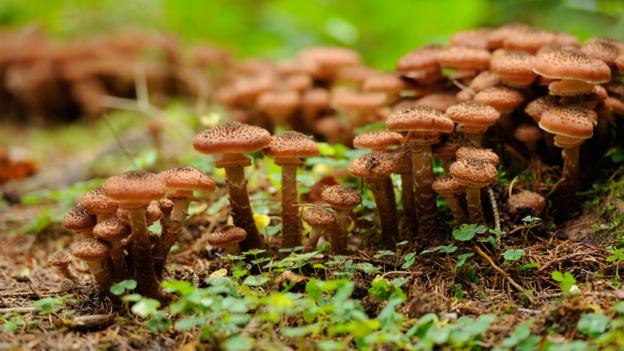
Source:BBC Earth
Typically, when hearing the word fungus, most people think of mushrooms and, well, they’re not wrong. Mushrooms are a type of fungus, but in their entirety. You can think of them as the ‘fruits’ of the fungus. The majority of a fungus is underground, composed of interconnected filaments, called rhizomorphs (rather like a root system). Those ‘roots’ are what connect the aptly named ‘Humongous Fungus’. The entire fungus is spread over a colossal area of over 3.4 square miles (8.8 square kilometres).
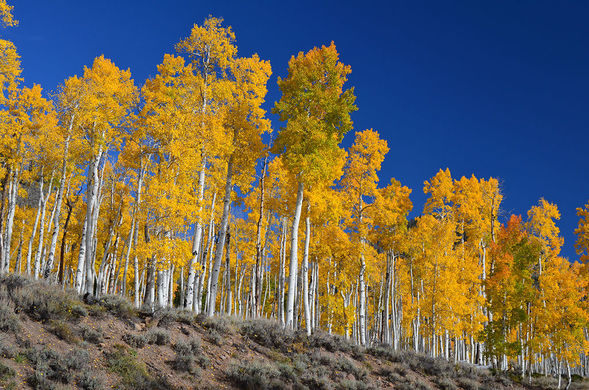
Source:Atlas Obscura
The second one, Pando, also called the’ Trembling Giant’, is a clonal colony of a single, male quaking aspen tree. The forest is assumed to have one massive underground root system, sprawling over 106 acres or 0.42 square kilometres. If we talk simply in terms of mass, Pando easily takes the cake, collectively weighing around 6,000 tonnes (6 million kilograms). The root system of Pando is estimated to be 80,000 years old, making it one of the oldest known living organisms.
The reason both Pando and Humongous Fungus are considered to be one organism is because all of them are connected and therefore are clones of the original tree/fungus and have identical genetic markers.
Thank you for reading! Follow for more science content.
Here’s a video about the same by the YouTube channel ‘Debunked’ :

 The Science Hub
Well written! I like how organized your blog is, and this post is very informative. Keep it up!
LikeLiked by 1 person