The organism
generally given the title of ‘The Largest Organism’ is the Blue Whale, or, if
specific to land, the African Elephant. But, as I’m about to explain in this
post, is not exactly accurate.
So, you might be
asking, what exactly is the largest living organism on the planet? Well, your
question can have two answers – Armillaria ostoyae, commonly known as honey
fungus, and Pando.
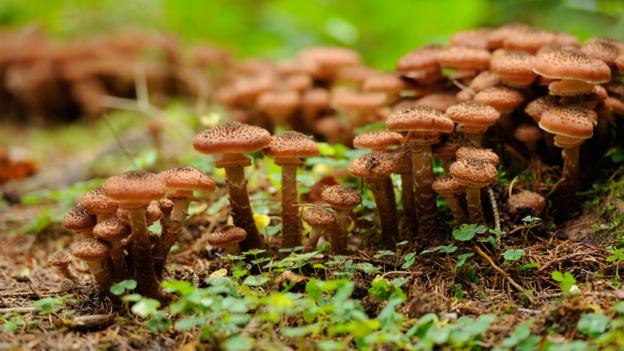
A small section of the Humongous Fungus. Source:BBC Earth
Typically, when
hearing the word fungus, most people think of mushrooms and, well, they’re not
wrong. Mushrooms are a type of fungus, but in their entirety. You can think of them as the ‘fruits’ of the
fungus. The majority of a fungus is underground, composed of interconnected
filaments, called rhizomorphs (rather like a root system). Those ‘roots’ are
what connect the aptly named ‘Humongous
Fungus’. The entire fungus is spread over a colossal area of over 3.4 square
miles (8.8 square kilometres).
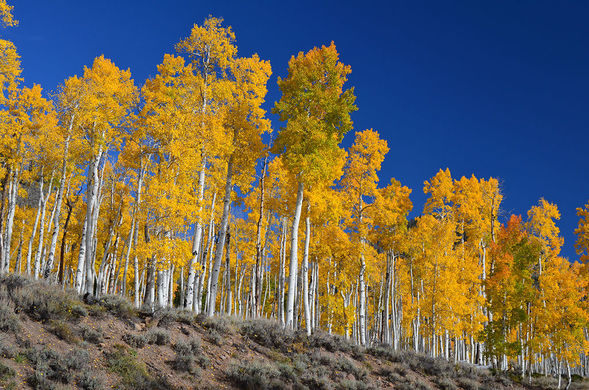
An image of Pando. Source:Atlas Obscura
The second one, Pando, also called the’ Trembling Giant’, is a clonal colony of a single, male quaking aspen tree. The forest is assumed to have one massive underground root system, sprawling over 106 acres or 0.42 square kilometres. If we talk simply in terms of mass, Pando easily takes the cake, collectively weighing around 6,000 tonnes (6 million kilograms). The root system of Pando is estimated to be 80,000 years old, making it one of the oldest known living organisms.
The reason both
Pando and Humongous Fungus are considered to be one organism is because all of
them are connected and therefore are clones of the original tree/fungus and
have identical genetic markers.
Thank you for reading! Follow for more science content.
Here’s a video about
the same by the YouTube channel ‘Debunked’ :
The concept of
colonising Mars and becoming an interplanetary civilisation is one that has
been talked about for decades, yet has only rather recently seen some action.
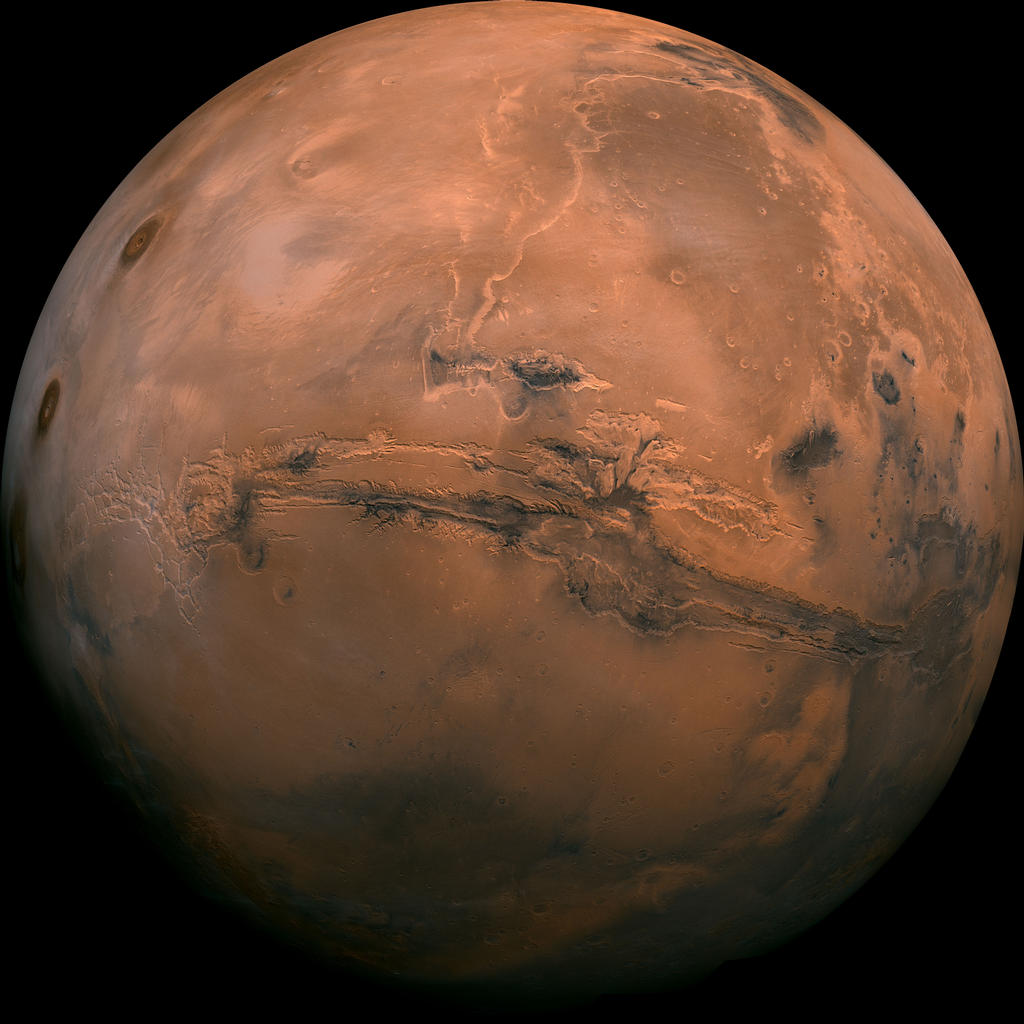
This idea sounds quite achievable, for Mars has a great deal of similarities to
Earth – the gravity is 0.38% of Earth’s, a Martian day is very close in
duration to Earth’s (24 hours, 39 minutes and 35.244 seconds), it has a surface
area 28.4% of Earth’s, which is slightly less than the amount of dry land on
Earth; a similar axial tilt of 25.19° and, as a result, has seasons comparable
to Earth (although they last nearly twice as long, as a Mars year is about 1.88
Earth years); and recent observations have confirmed the existence of water ice
on the planet.
Source: space.com
However, that’s
where the similarities end and the problems begin. Mars is believed to once
have had an atmosphere and climate similar to Earth, but, as Mars’ core cooled
down and solidified, it purged Mars of its magnetic field, allowing most of its
atmosphere top be blown away by solar winds. What’s left of Mars’ atmosphere
now is only about 1% of the atmosphere of Earth, now composed mostly of carbon
dioxide.
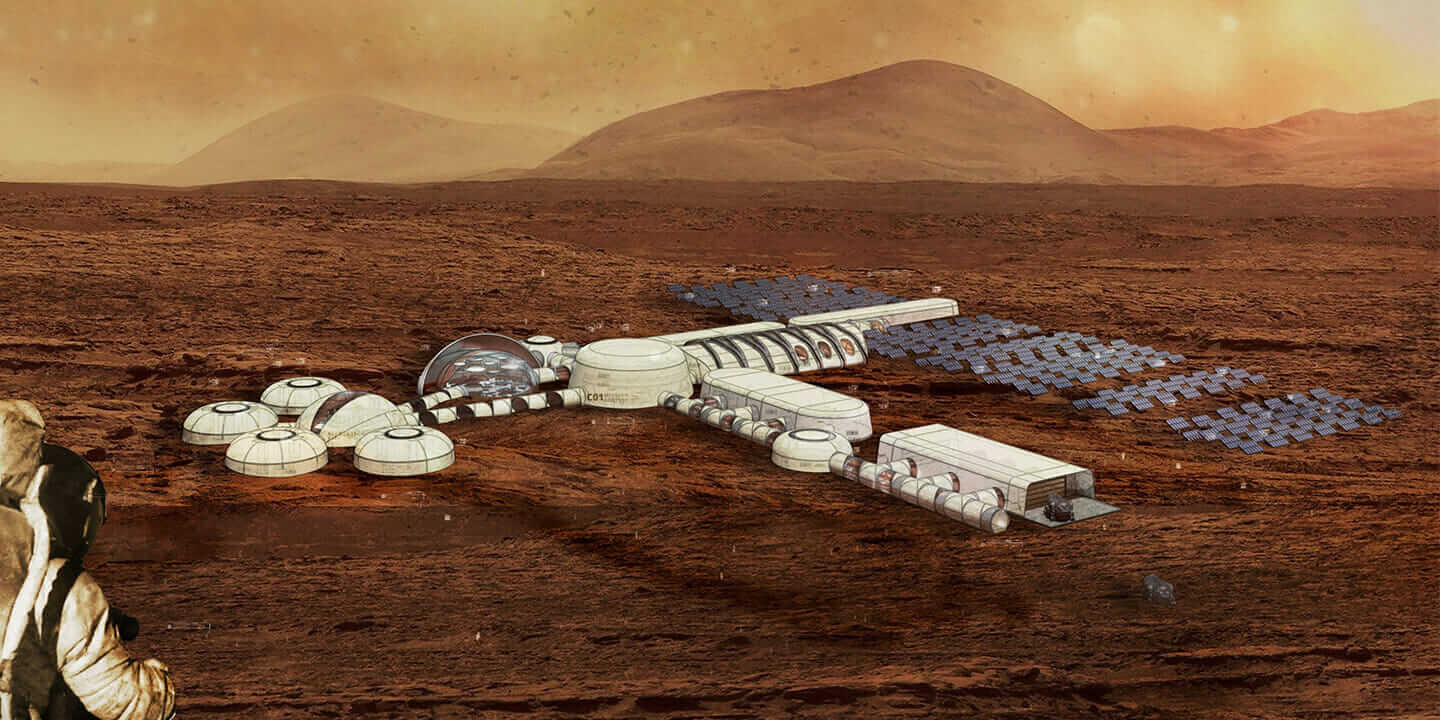
This draws us to our next problem, radiation. On Earth, radiation isn’t one of our primary worries (although it may be soon, because of the depletion of the ozone layer), but it is on Mars. To retaliate this problem, the bases that humans live in would have to have rounded shapes, as edges and corners are weak points; they would have to encased in ice and on top of that, be covered with a layer of Martian soil to block radiation from getting in. These bases would be small, cramped on the inside and have minimal windows. The team of technicians who begin the colonization would live boring, repetitive lives in these bases and would have to remotely control rovers and other machines from the inside. The food they eat would be bland, although this could probably be improved. All this would lead to morale being awfully low.
The machines we send
on Mars would also encounter problems as Martian dust particles, being much
smaller than Earth’s, would get into the machinery and congest our gears and
electronics.
Another one of the extensive issues with colonising Mars is power and oxygen. Solar energy will only be about 30% as effective as it is on Earth and wind energy would be terrible due to the incredibly thin atmosphere. Creating an oxygen rich atmosphere would be an extreme task, as we can’t simply bring any plant to Mars. However, we can use cyanobacteria, organisms which can respire anaerobically and add oxygen to the atmosphere. The reason we know this will work is because of the sudden increase of oxygen in our planets atmosphere, the aptly named ‘Oxygen Catastrophe’. This occured 2.5 billion years ago and was Earth’s first mass extinction event. Oxygen is a very reactive element, which isn’t usually a problem, but is when you’re an organism made of a few molecules. Oxygen takes away some of their atoms and/or molecules, killing them.
Colonising Mars is a project of an astronomical scale, and would take decades to finish. In this blog, I’ve just grazed the surface of what it would be like to colonise Mars. Possibly, I might even write a follow-up to this blog and discuss more about this topic. (If anyone is interested, there was a game quite recently released about colonising mars called ‘Surviving Mars’. It was released for Xbox One, PlayStation 4 and PC.)
Thank you for
reading! Do consider following for more science content
Just like always, I’ll be attaching a video by Kurzgesagt – In a Nutshell on the same:

 The Science Hub