
A red dwarf is a type of star which was never able to gather enough energy or mass to form into a normal-sized star or massive star. These stars are the most common stars in our universe and the smallest, just larger than the size of gas giants like Jupiter. This small size enables them to live the longest, as they burn slowly over trillions of years. That is precisely why they are the best type of star for the survival of life in the universe.
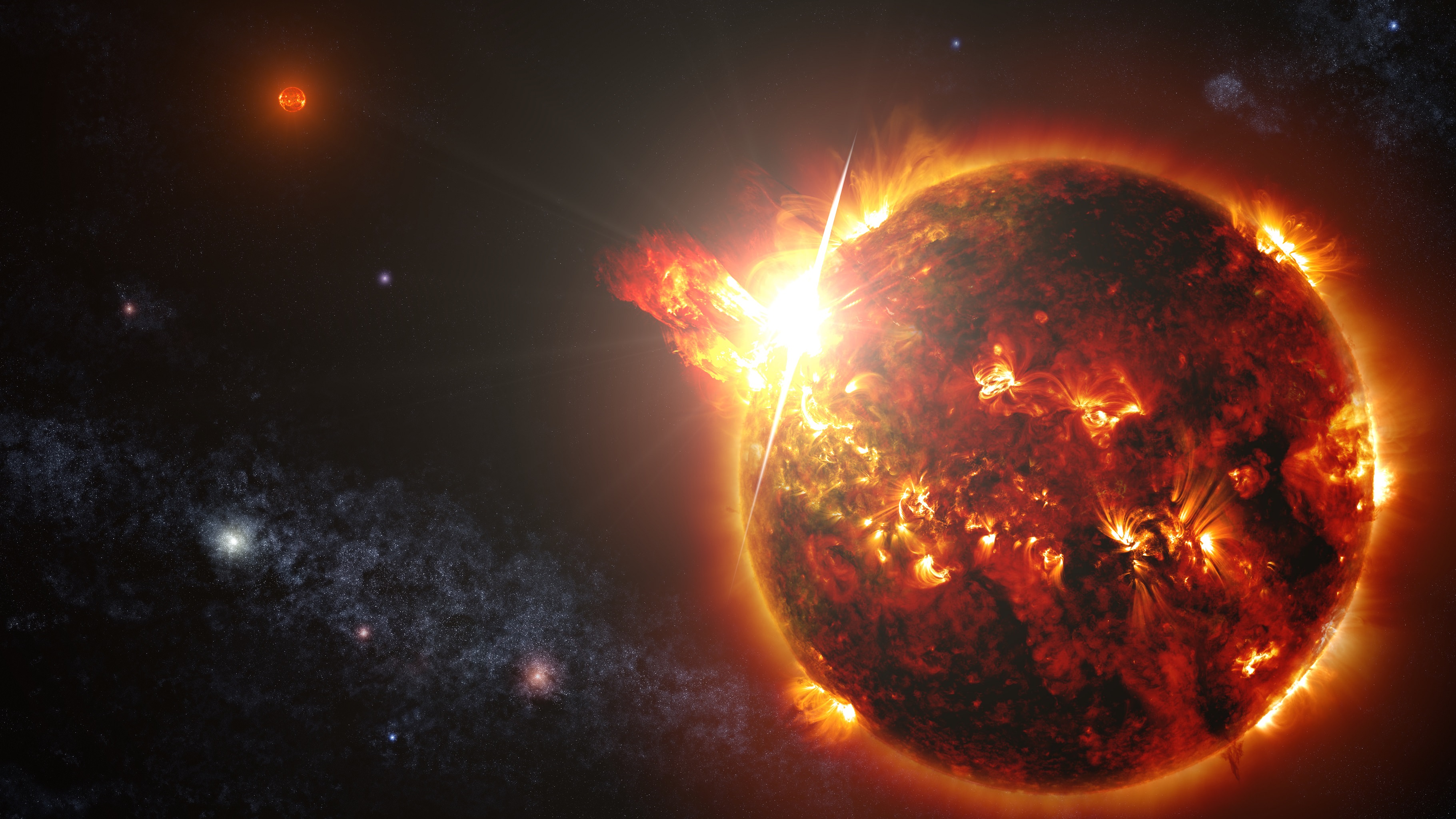
Source: Universe Today
On the other hand, the habitable zone of a red dwarf is very small. To be in the habitable zone of a red dwarf, a planet would need to be about 75 times closer to the aforementioned star than mercury is to our sun.
But, this is detrimental for the planet as this tidally locks the planet. This means that the planet will not rotate the way most planets do. One side would be locked in perpetual, blazing day and the other in a cold, endless night. A small fraction of the region between the two zones could have a day-night cycle, liquid water and could possibly support life.
Another problem with red dwarfs is that they have incredibly large solar flares. Our sun and all stars beget solar flares, but, due to the closeness of the planet to the red dwarf, these solar flares could have cataclysmic effects on the aforementioned planet.
The death of a red dwarf is a lethargic process as the star slowly burns its supply of hydrogen, fusing it into helium. When a red dwarf, or any star for that matter, runs out of supply of hydrogen, it fuses helium into carbon and carbon into heavier elements. For heavier stars, this process is gradual, but in a red dwarf, this sparks a huge change as they start to radiate blue and burn hotter.
In all stars, there exists a balance between the star’s mass, pertaining to gravity, and its heat. When this balance is disturbed, the stars die. A normal-sized like our sun will slowly shed its outer layers in an exquisite planetary nebula, leaving behind a tiny, yet dense white dwarf whereas a supermassive star will go out in a bang, literally, in the form of a supernova. On the other hand, a red dwarf will, quite peacefully, transform into a white dwarf.
A white dwarf is a very dense remnant of a star, with lots of reserved heat, which it releases over trillions upon trillions of years.
Now, not even white dwarfs can last forever, but that’s a topic for another blog.
Thank you for reading! Please do follow for more science content.
If you would like to look into this topic more, I highly suggest the YouTube channel Kurzgesagt -In a Nutshell. Here’s their video about red dwarfs:

 The Science Hub